The Second Prescription: Your Records Recovery Ward – The Art of Proper Storage
In our last consultation, we looked at the first basic habit of record care: proper handling. Once you know how to keep fingerprints off the playing surface, the next question is where your records spend most of their time: in storage.
If you’re building a collection, learning how to store vinyl records properly is one of the simplest ways to prevent avoidable damage over time.
Think of your collection as a recovery ward, with each record settled safely in its place. How you store them matters over the long term, because poor support, heat, sunlight and damp can all leave their mark on both the vinyl and the sleeve.
In this guide, we’ll keep the medical theme but make the prescription simple. We’ll look at three things: how your records should stand, what sleeves should protect them, and what kind of room gives them the best chance of staying in good condition.
How to Store Vinyl Records: Vertical vs. Horizontal

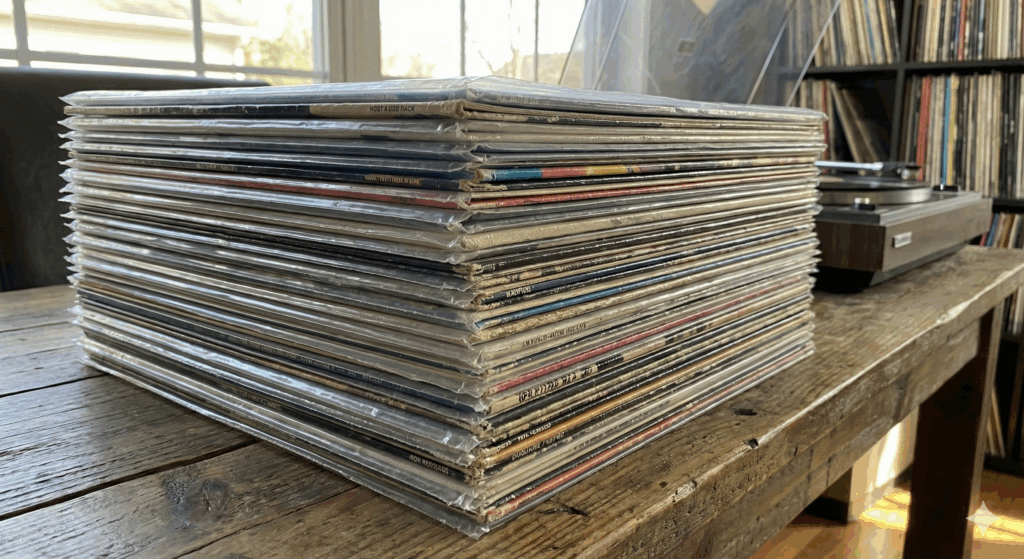
If you remember only one storage rule from this article, make it this one: keep your records VERTICAL, like books on a shelf. It is a simple habit, but an important one.
Vinyl (PVC) is a thermoplastic, so heat and pressure can affect its shape. When records are stacked horizontally, the weight of the pile puts prolonged pressure on the records underneath, particularly if the room becomes warm, that can contribute to warping.
A warped record is easy to spot on a turntable because the surface rises and falls as it spins. In more severe cases, the stylus may struggle to track the groove properly and the record can become difficult or impossible to play.
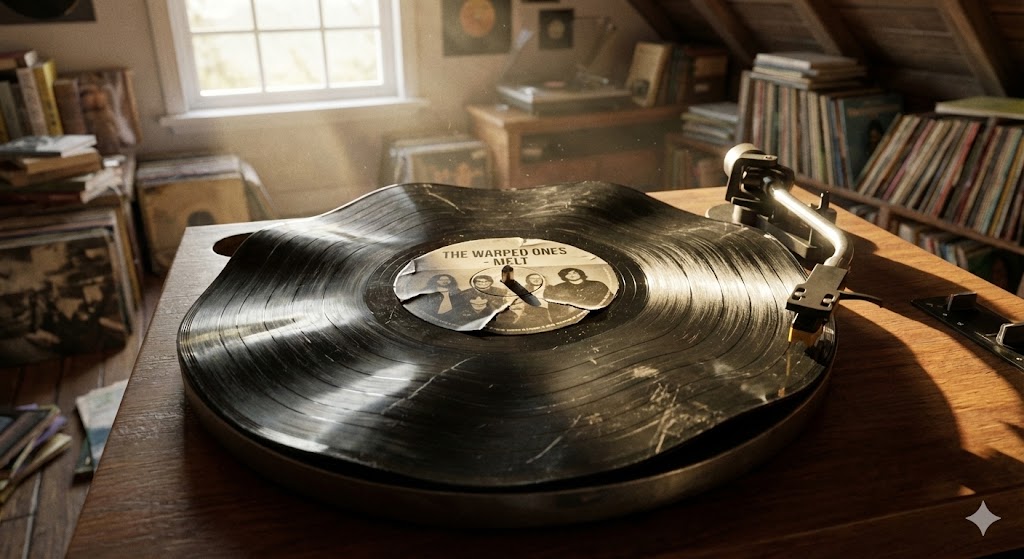
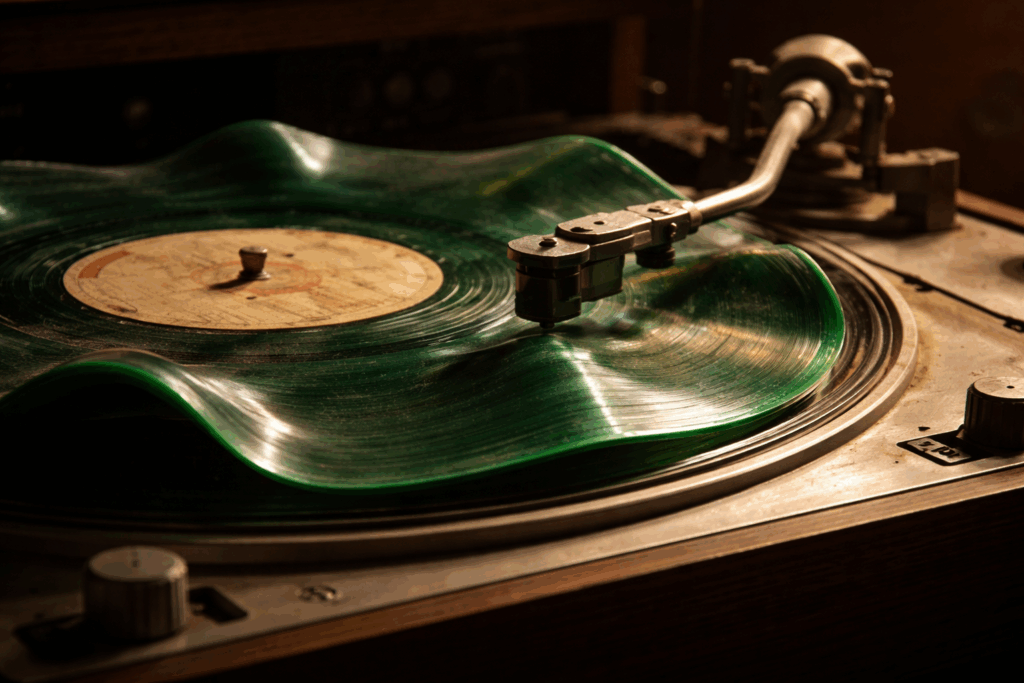

Vertical storage gives each record much better support, but there is another small detail worth watching: don’t pack the row too tightly. You should be able to take a record from the middle without wrestling with its neighbours. If brute force is involved, the shelf is probably too full.
For a conservation-focused reference, the Library of Congress also recommends storing grooved discs upright and properly supported.
Protective Dressings: Inner and Outer Sleeves
Your records really need two different kinds of protection. The inner sleeve looks after the vinyl itself, while the outer sleeve protects the album cover from the wear and dirt that come with normal handling and storage.
1: The Inner Sleeve – Protection Against Abrasion and Static
Many records come from the factory in a standard paper inner sleeve. It does the basic job, but paper may produce fine scuffs/fibers on the playing surface with repeated use. It can also contribute to static, which makes dust much easier for the record to collect.
A simple upgrade is to use poly-lined, anti-static inner sleeves. Their high-density polyethylene lining provides a smoother, less abrasive surface and helps reduce static build-up. It is not the most glamorous upgrade in a vinyl collection, but your records are unlikely to complain.
2. The Outer Sleeve – Protecting the Album Cover
The cover is part of the record, not just the packaging you throw away. An archival-quality polythene outer sleeve helps protect it from shelf wear, ring wear, dust, handling marks and minor accidental splashes. It also helps preserve the artwork, the condition of the cover and, for collectors, the record’s provenance and value.
The Ideal Climate
Once the records are standing properly and wearing the right sleeves, the room itself becomes the final part of the prescription. There are three environmental problems you want to keep away from your collection: heat, direct sunlight and humidity.
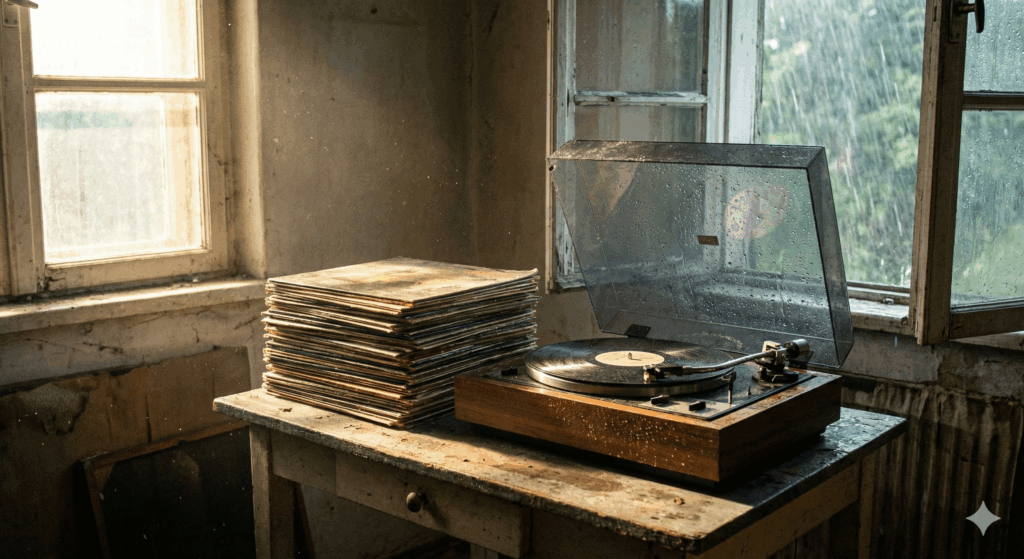
1. Heat (The Fever): Heat is one of the main causes of warping. Keep records away from radiators, heating vents, the top of an amplifier and anywhere exposed to direct sun. An attic in summer can become extremely hot, so it is not a good home for a vinyl collection.
2. Direct Sunlight (The Radiation Burn): Sunlight brings two problems at once. The heat can warp a record in a matter of hours, while ultraviolet (UV) light can fade the sleeve artwork and cause permanent damage. A sunny windowsill may look good in a photograph, but it is a poor long-term storage solution.
3. Humidity (The Damp): Damp is particularly bad news for cardboard sleeves. Basements, cellars and other humid spaces can encourage mould and mildew, leaving stains, weakening the cover and creating that familiar musty smell. A dry, well-ventilated room is a much safer place for the collection.
The Canadian Conservation Institute similarly recommends keeping vinyl records upright, supported at both ends, and in the coolest and driest suitable room available.
Your Next Appointment
In the end, knowing how to store vinyl records properly comes down to three things: keep them vertical, use the right sleeves, and protect them from heat, sunlight and damp. None of this is complicated, and once the setup is right, there is very little day-to-day work involved.
With your records properly handled and safely stored, the next subject is routine cleaning. In the next consultation, we’ll move on to The Third Prescription: The Daily Cleaning Ritual and look at one of the simplest tools in regular record care: the carbon fibre brush.
Until then, tell me in the comments where you keep your collection. Have you found a storage setup that works particularly well for you?
The Doctor is always interested in a good prescription.