
The Third Prescription: The Daily Hygiene Ritual – The Pre-Play Check-Up
Welcome back to the clinic. In the first two prescriptions, we looked at proper handling and proper storage. Those two habits go a long way towards keeping fingerprints, unnecessary wear and storage damage away from your records.
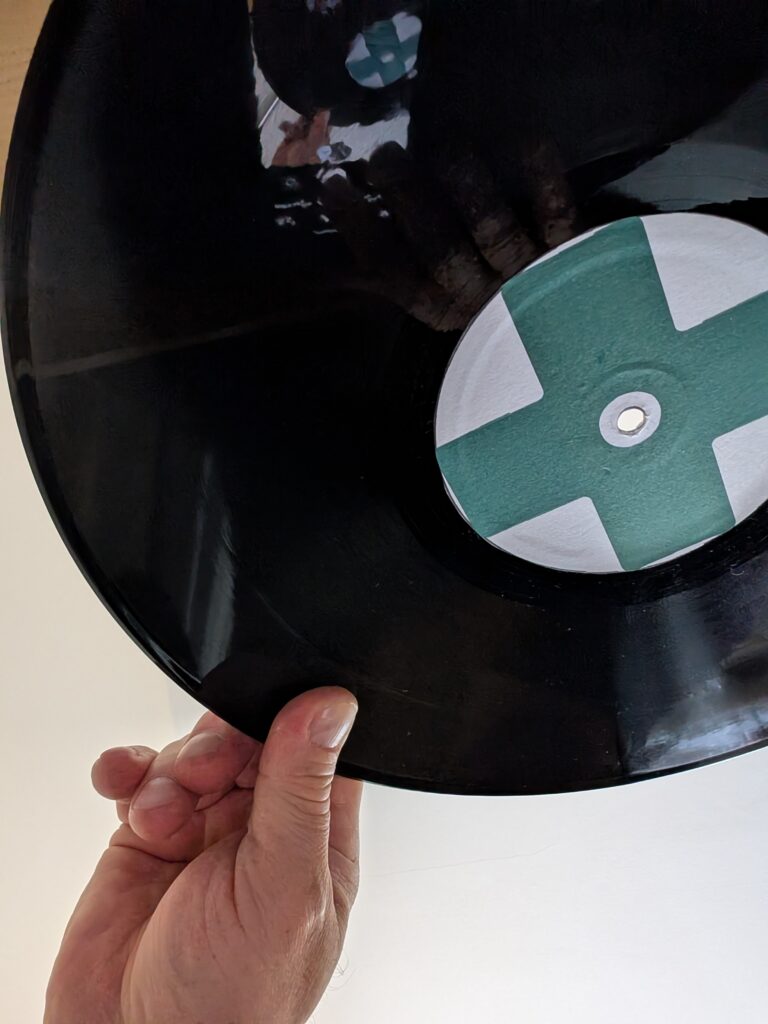
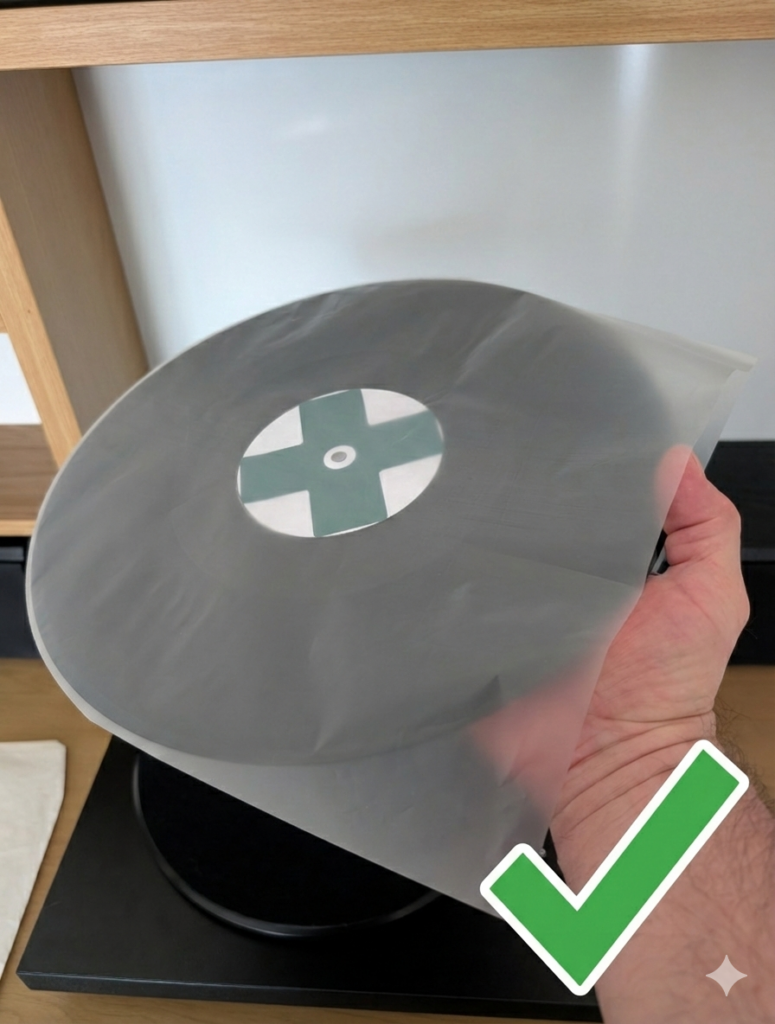
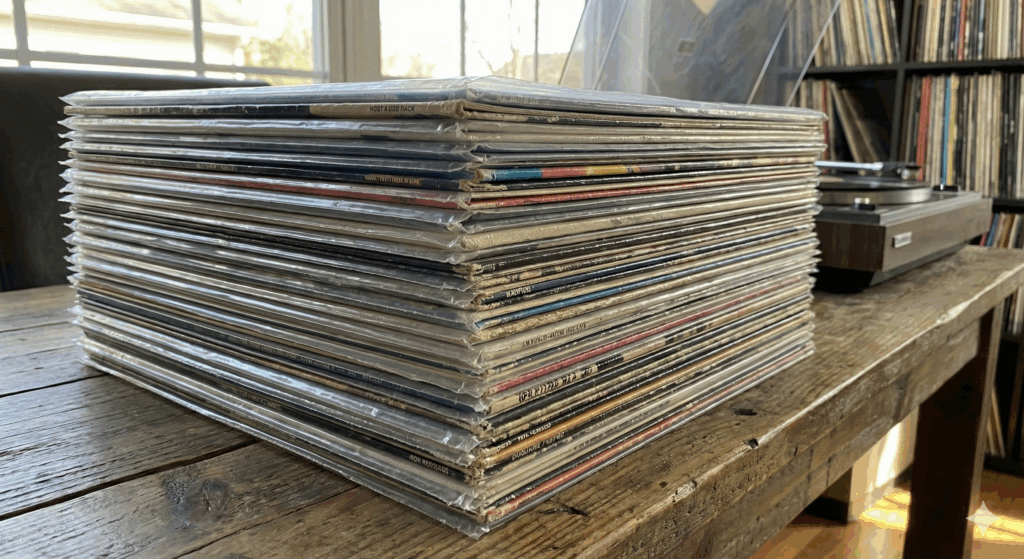

If you’re new to vinyl, learning how to use a carbon fibre record brush is one of the quickest ways to remove loose dust before playback.
Now you are ready to listen. Before the stylus drops, though, there is one more habit worth adding to the routine: a quick 15-second pre-play check-up. It is a simple way to remove loose surface dust before playback and help keep both the record and stylus cleaner.
For a conservation-based reference, the Canadian Conservation Institute also recommends carbon fibre brushes for removing dust and loose debris from vinyl records.
Why Static Attracts Dust
Even if a record has been resting in an anti-static sleeve, dust is still part of everyday life. Because the record is made from PVC, it can build up a static electrical charge, which makes loose particles more likely to cling to the surface.
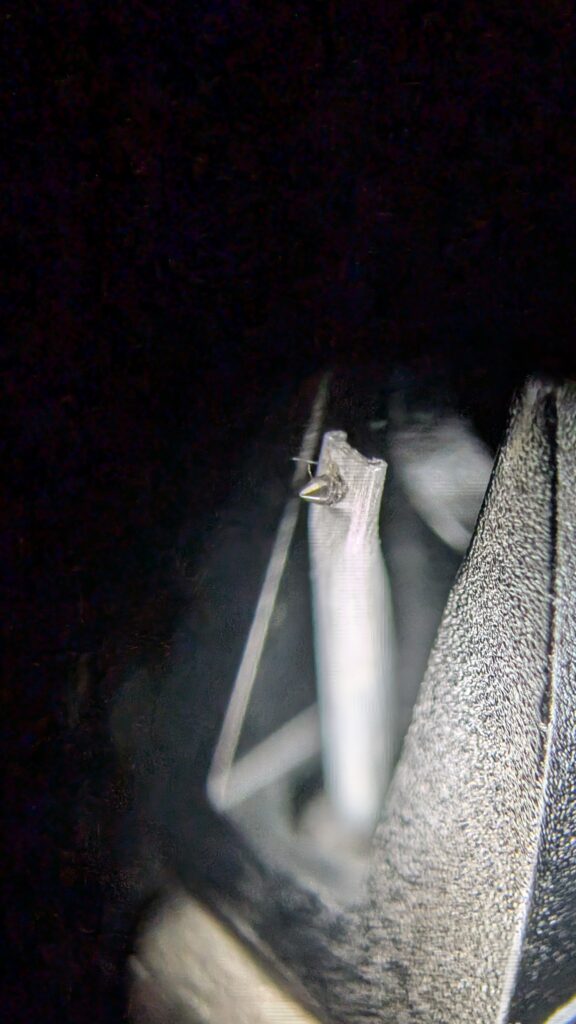
Stage 1 — New record + carbon brush (baseline): After playing a sealed new record that was carbon-brushed before each side, the stylus shows only minimal, normal residue.
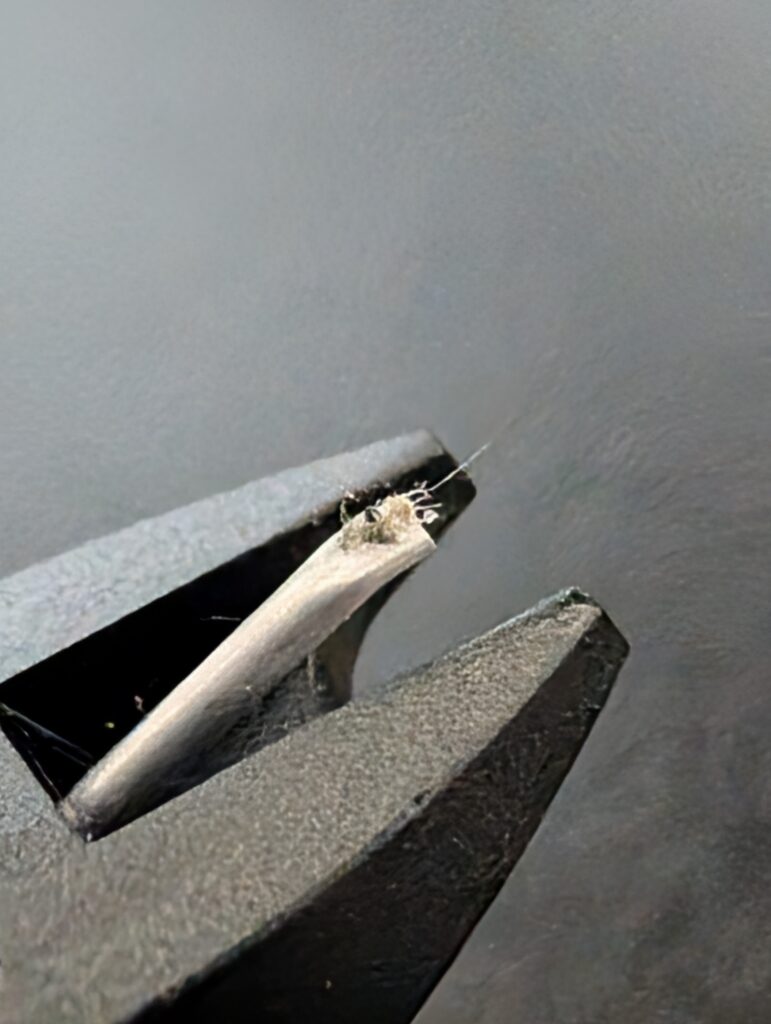
Stage 2 — Paper inner sleeve, no brushing: A record stored in a paper inner sleeve and played without brushing leaves noticeably more debris on the stylus (dust + paper fibres).
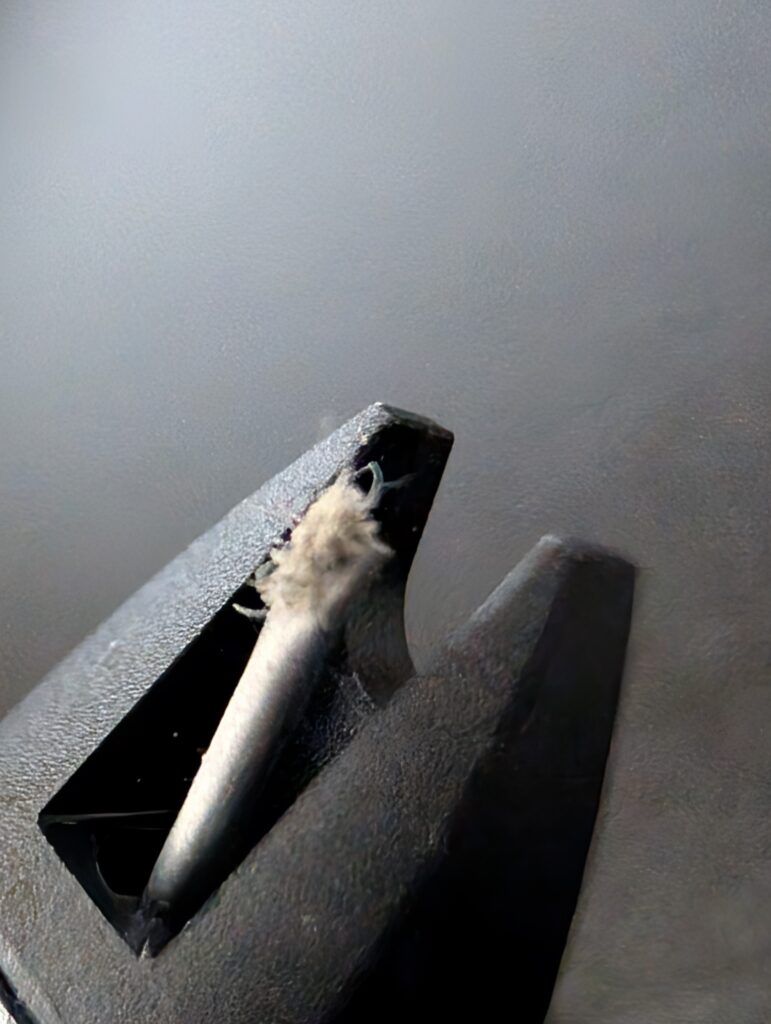
Stage 3 — Borrowed record, uncleaned (worst case): After just one side, the stylus picks up heavy contamination — treat unknown-history records as high-risk.
Photos taken on the same setup; results vary with room dust, humidity, record condition, and stylus profile.
Once the record comes out of its sleeve, airborne dust can settle on it and find its way into the grooves. You may barely see those particles, but the stylus tip is tiny, so even a small speck can become a very noticeable obstacle during playback.
When the stylus meets those particles, the result can be the familiar pops and clicks. Repeated contact with dirt is not ideal for either the diamond tip or the groove walls, so removing loose dust before playing a record is a sensible bit of preventative care.
The Carbon Fibre Anti-Static Record Brush
For this quick routine, you only need one basic tool: a carbon fibre record brush. It is inexpensive, easy to use and small enough to keep next to the turntable, which makes it one of the most practical pieces of kit in a record collection.
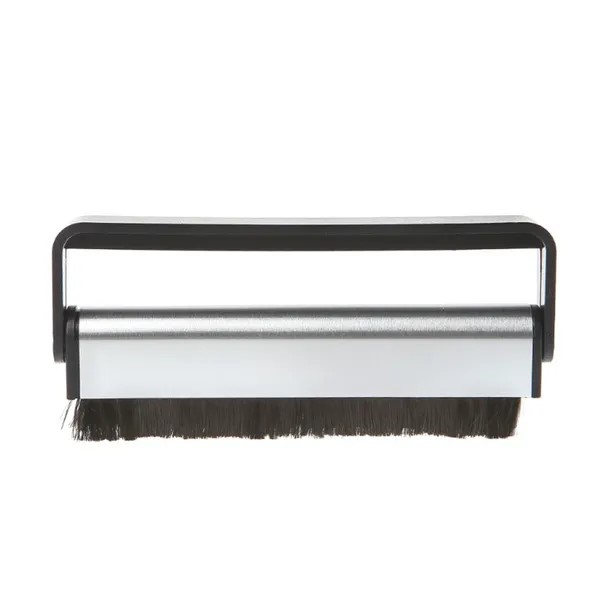
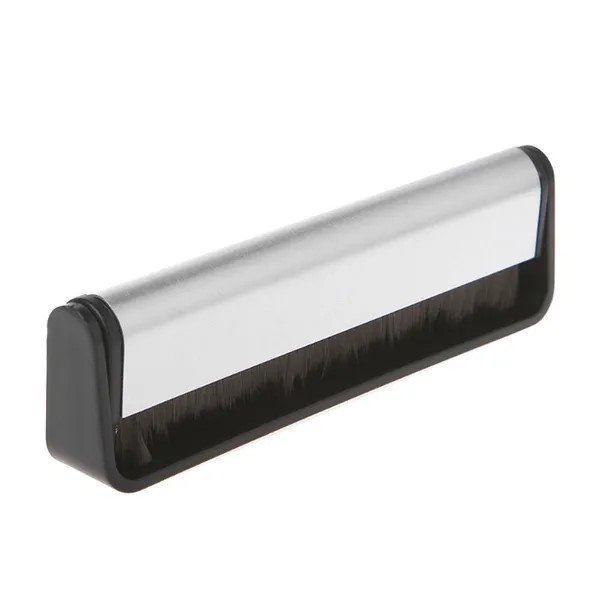
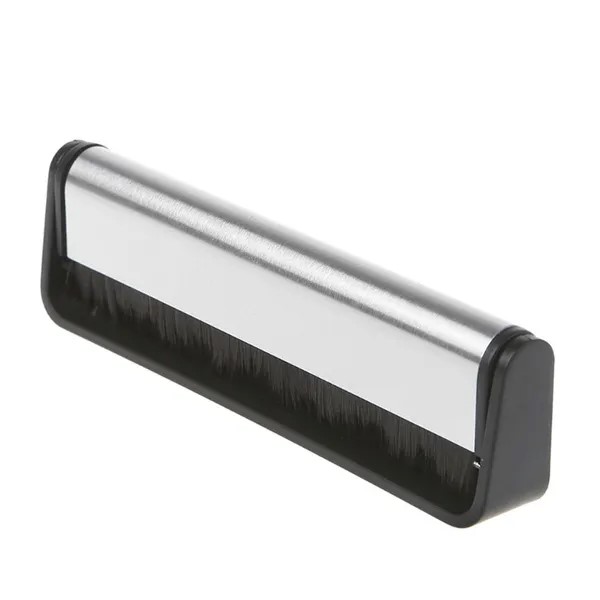
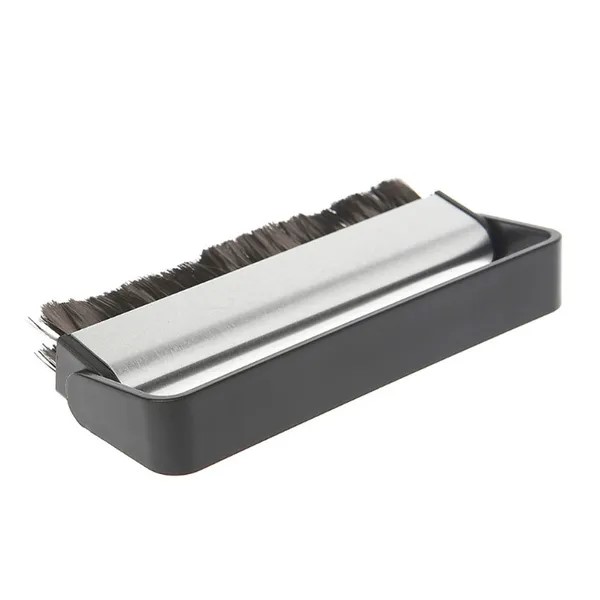
Carbon fibre anti-static record brush for vinyl cleaning
A proper carbon fibre brush has two useful jobs:
- The very fine carbon fibres sweep loose dust from the record surface and groove area as the record turns.
- Carbon fibres are electrically conductive, so a properly designed anti-static brush can help reduce static charge while removing loose dust. The exact way this works depends on the design of the brush.
Conductive carbon fibres are also used in commercial record brushes specifically to remove fine dust and reduce static charge.
So the brush is doing more than simply pushing visible dust around. Used correctly, it also helps deal with the static charge that encourages dust to stay attached to the record.
How to Use a Carbon Fibre Record Brush: The 15-Second Routine
The technique is simple, and after a few records it becomes automatic. The main thing is to be gentle and let the brush do the work.
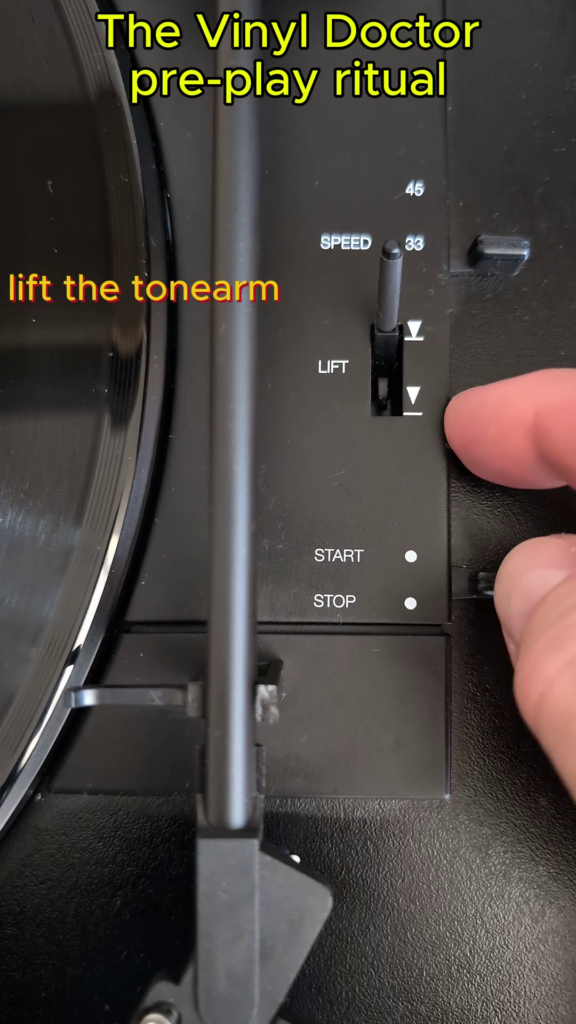
- Place the record on the platter and start the rotation. If you’re using an automatic turntable, lift the tonearm first; on a manual deck, you can simply keep the tonearm safely off the record.
- Hold the brush by its body as recommended by the manufacturer, keeping your fingers away from the carbon fibres.
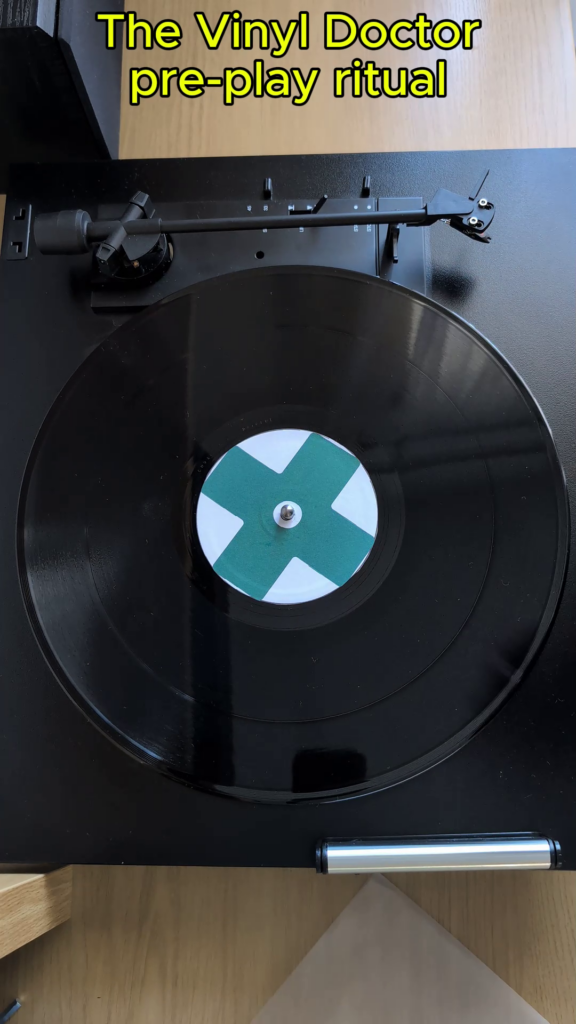
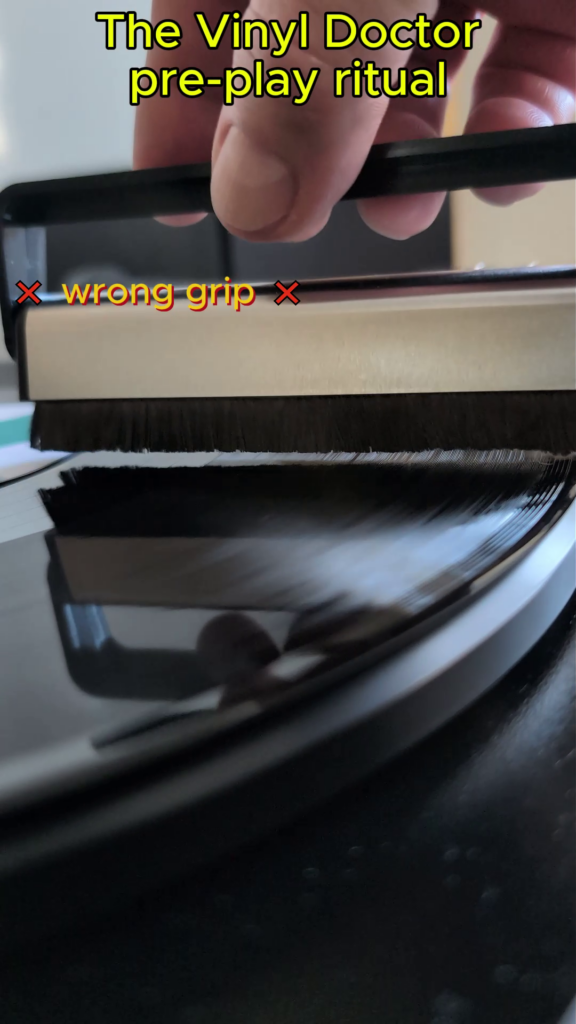
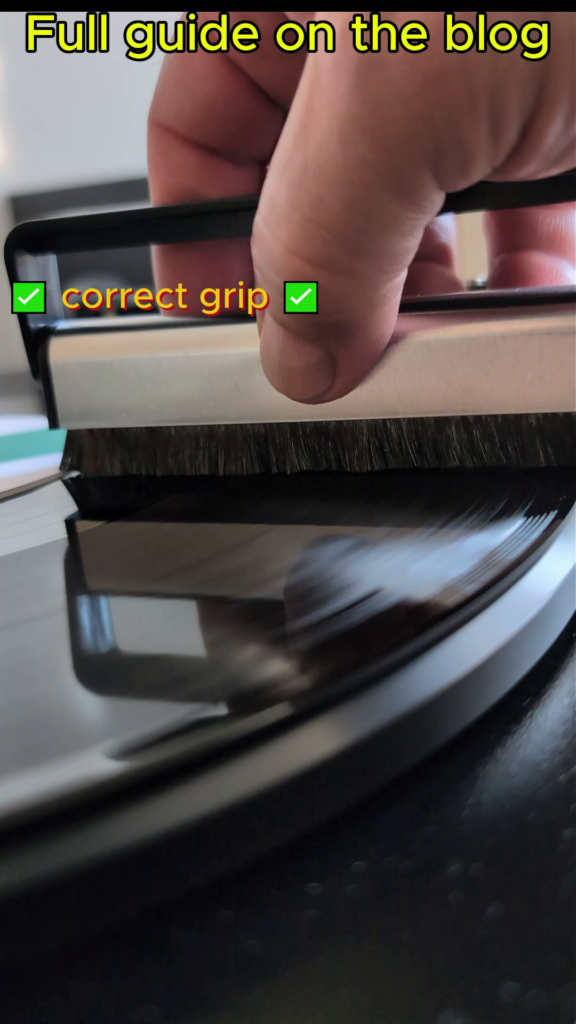
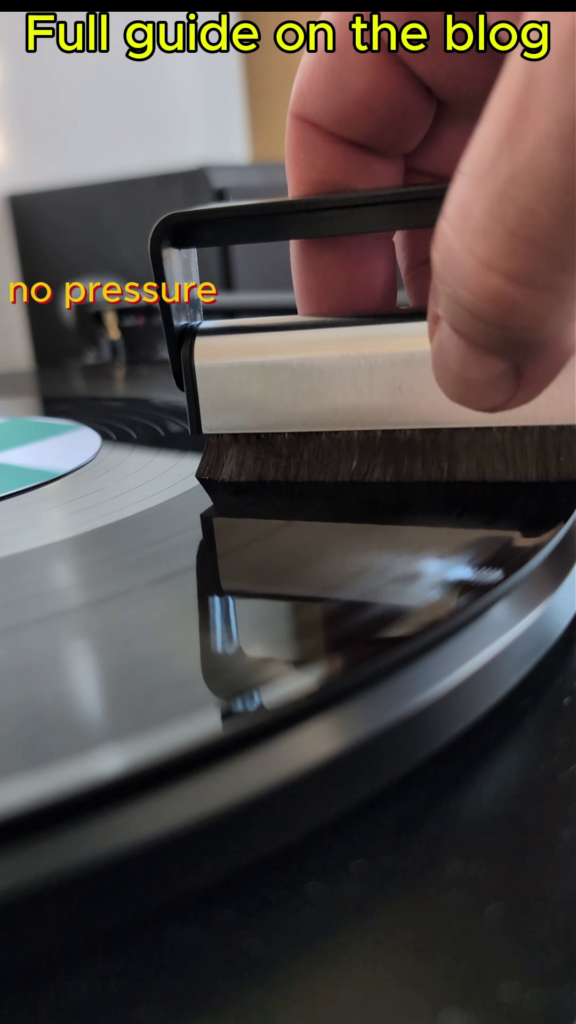
- Lower the brush very gently onto the spinning record, across the grooves. Do not press down; let the brush’s own weight rest on the surface.
- Keep the brush steady for two or three full rotations so the fibres can collect the loosened dust.
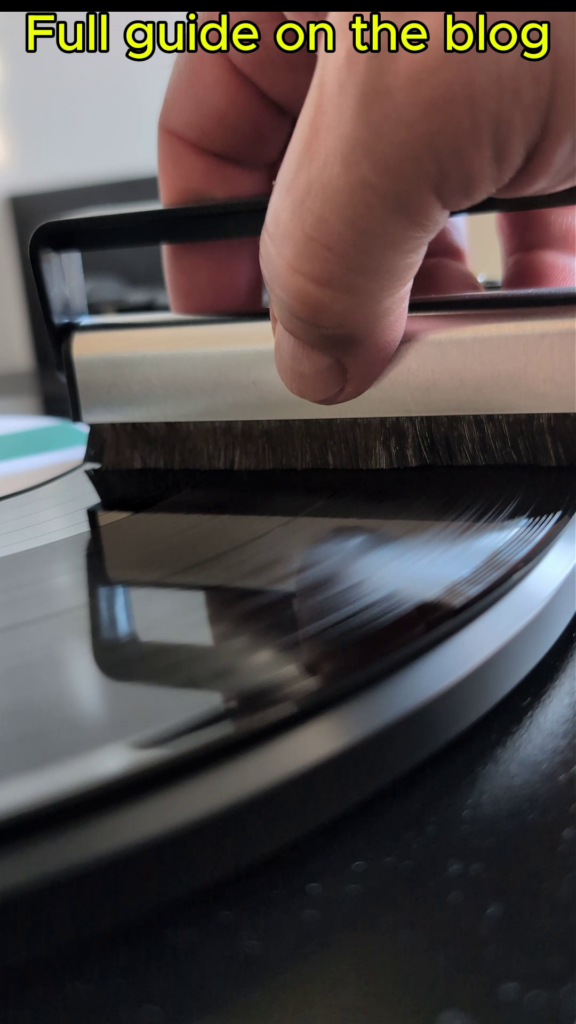
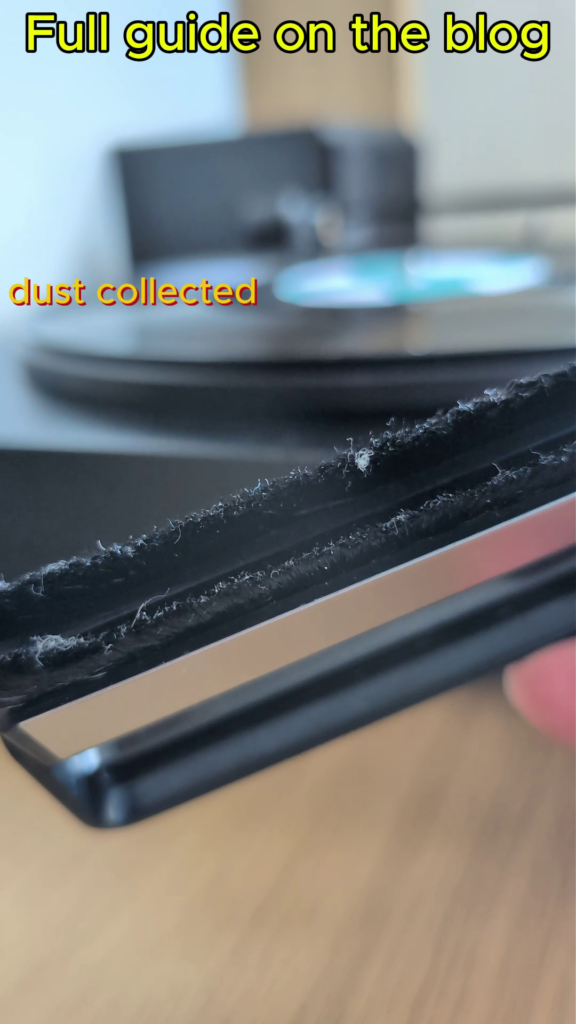
- Then move the brush slowly towards you, across the radius of the record and off the outer edge. You should see a fine line of dust collecting on the bristles. Avoid lifting the brush straight up, as some of that dust can end up back on the record.
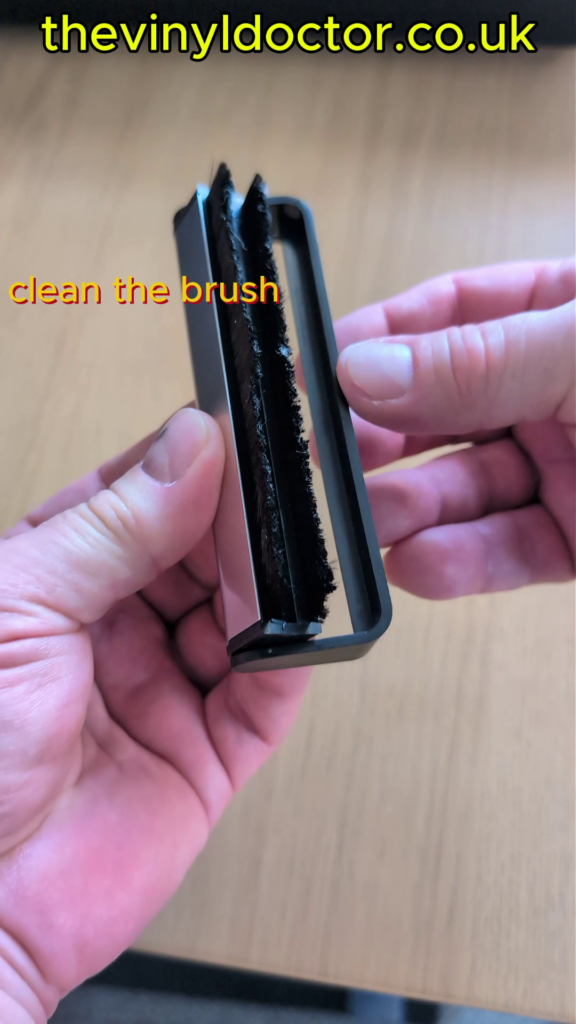
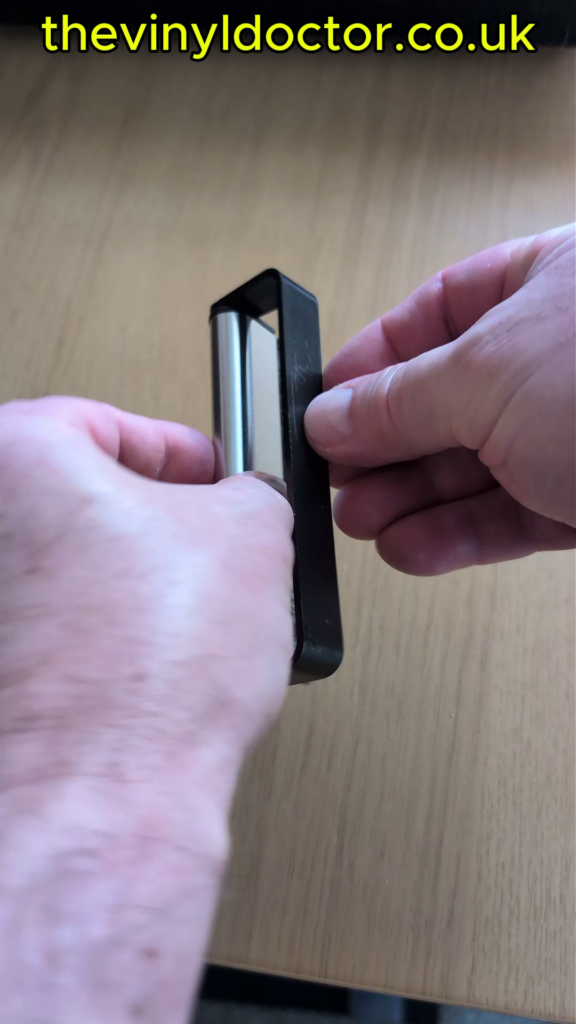
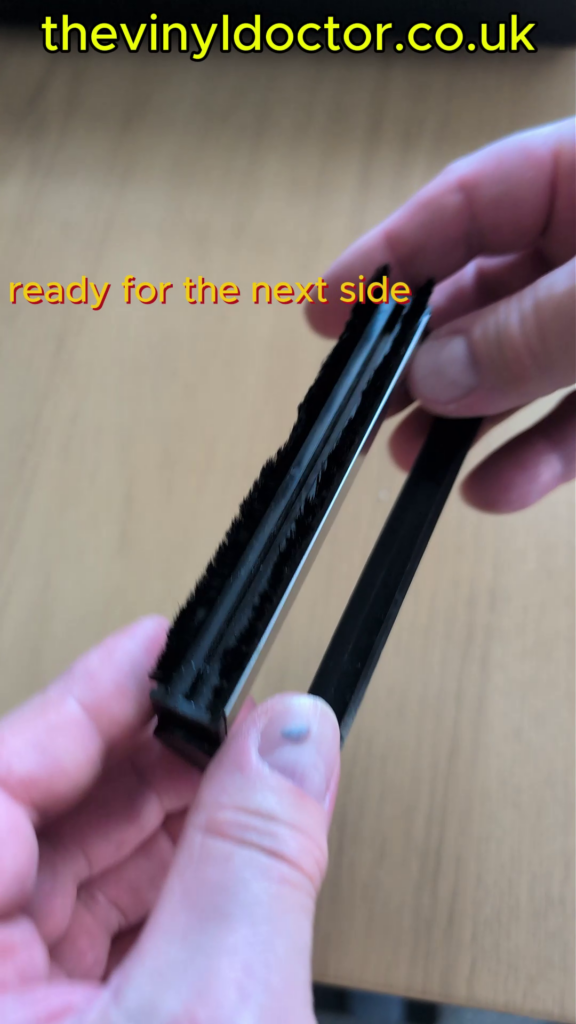
- Once the brush is clear of the record, clean the bristles by rotating the plastic handle back and forth so the built-in edge removes the collected dust.
What to Avoid
- Do not apply pressure: Pressing down can push debris further into the grooves and may increase the risk of scratching the surface.
- Do not use a dirty brush: Clean the brush after each use so you are not putting yesterday’s dust back onto today’s record.
- Do not use it for heavy contamination: A carbon fibre brush is intended for loose surface dust. It will not remove fingerprints, oils or stains, and trying to scrub them away with a dry brush can make things worse.
Examples of unsuitable brushes (do not use on vinyl)
A quick warning before you shop: plenty of brushes sold online look “record-friendly”, but that does not mean they are designed for vinyl grooves. Here are three common examples I would avoid.
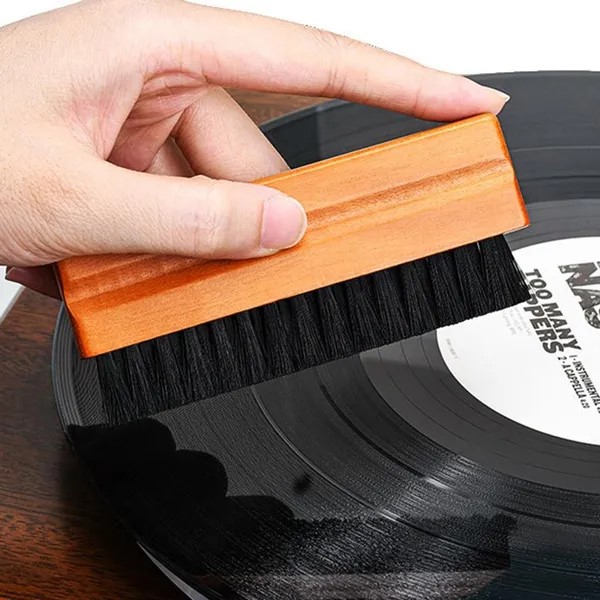

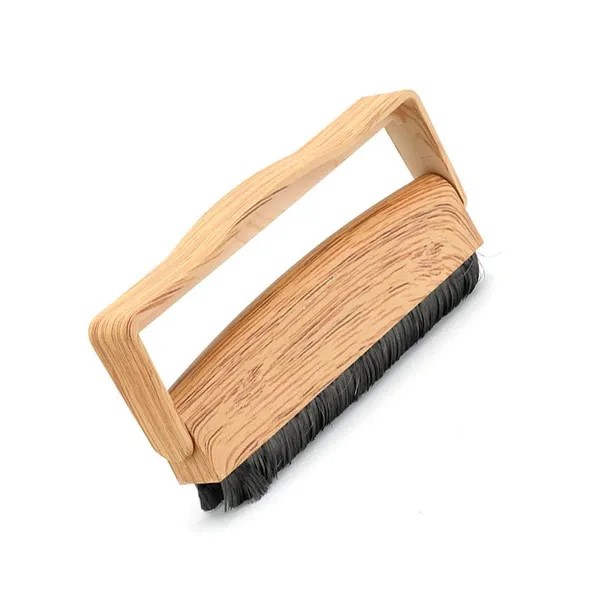
A brush can look soft and harmless and still have the wrong bristle type, stiffness or shape for a record. That can push debris further into the grooves or risk marking the surface. For routine dry cleaning, use a proper carbon fibre anti-static record brush made for vinyl.
The Community Clinic: A pro tip from the ward
Since publishing this prescription, one of our patients shared a technique worth adding to the official protocol. Credit goes to Francisco Ingelberts from Mexico – franciscoingelberts on TikTok.
Before brushing, gently touch the metal spindle (the central rod on your platter) with the carbon fibre record brush. The spindle is physically connected to your turntable’s chassis and, when properly grounded, acts as a discharge point for static electricity. By making this contact, you give the static charge a path to dissipate — which means your brush spends less energy fighting the static and more energy doing what it was prescribed to do: lifting dust and debris from the grooves.Several members of the community have reported noticeably more dust collected in the brush using this method. The Vinyl Doctor approves
When a Deeper Clean Is Needed
That completes the basic care routine: handling, storage and a quick pre-play clean. For a new or well-maintained collection, these simple habits cover most of the everyday care your records need.
Second-hand records can be a different story. Years of dust, fingerprints and old contamination are beyond what a dry carbon fibre brush is meant to handle. That is where wet cleaning and deeper cleaning methods come in, along with the right solutions, microfibre cloths and cleaning equipment.
That is where we are heading next. Until then, enjoy your records and keep the brush close to the turntable. And let me know in the comments: have you noticed an improvement in playback since you started using a carbon fibre brush?