The Second Prescription: Your Record’s Recovery Ward – The Art of Proper Storage
In our last consultation, we mastered the foundational procedure: the art of proper handling. Now that you know how to protect your records from their most common ailment—fingerprints—it is time to turn our attention to the place where they spend 99% of their lives: the storage
This is your record’s recovery ward. In this guide, we will construct this ward to the highest medical standards, focusing on three vital elements of care: the patient’s posture, their protective dressings, and the climate of the room.
If you missed our initial consultation, you can review it here: The First Prescription – The Art of Proper Handling
Vertical vs. Horizontal: Diagnosing the Critical Risk of Warping
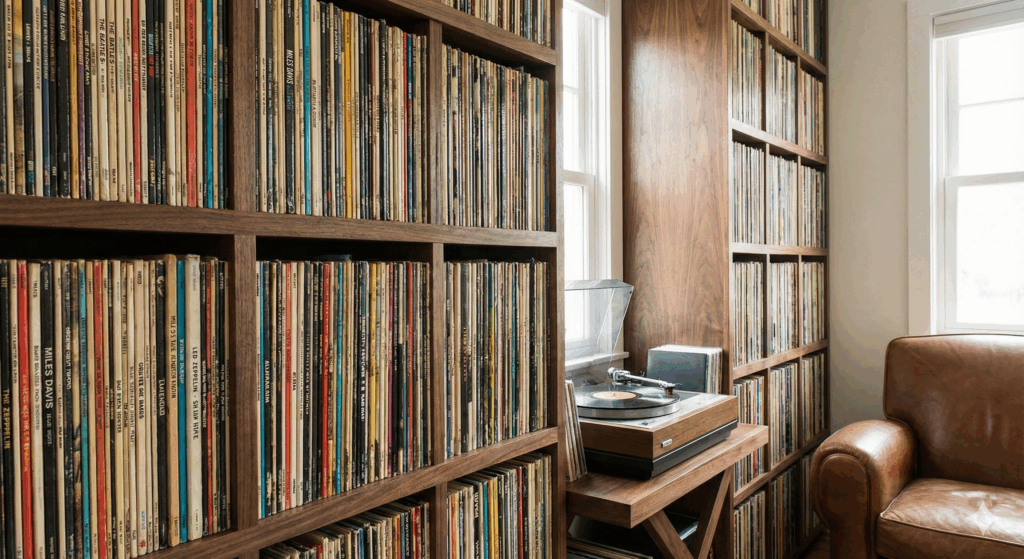

If you are to remember just one piece of medical advice from this entire consultation, let it be this: records must be stored VERTICALLY, ALWAYS VERTICALLY. Like books in a library.
Why such a strict directive? The physics of the situation are quite unforgiving. Vinyl (PVC) is a thermoplastic, making it susceptible to pressure and heat. When you stack records horizontally, even a small pile of 5-10 LPs exerts significant and uneven pressure on the patient at the bottom. Over time, this pressure, combined with ambient temperature fluctuations, will result in a severe physical trauma known as “warping.”
A warped record is a critically ill patient. On the turntable, its rotation will be visibly undulating, causing audible distress (a condition known as “wow and flutter”). In severe cases, the stylus will be unable to track the groove and will dislocate, rendering the patient unplayable.
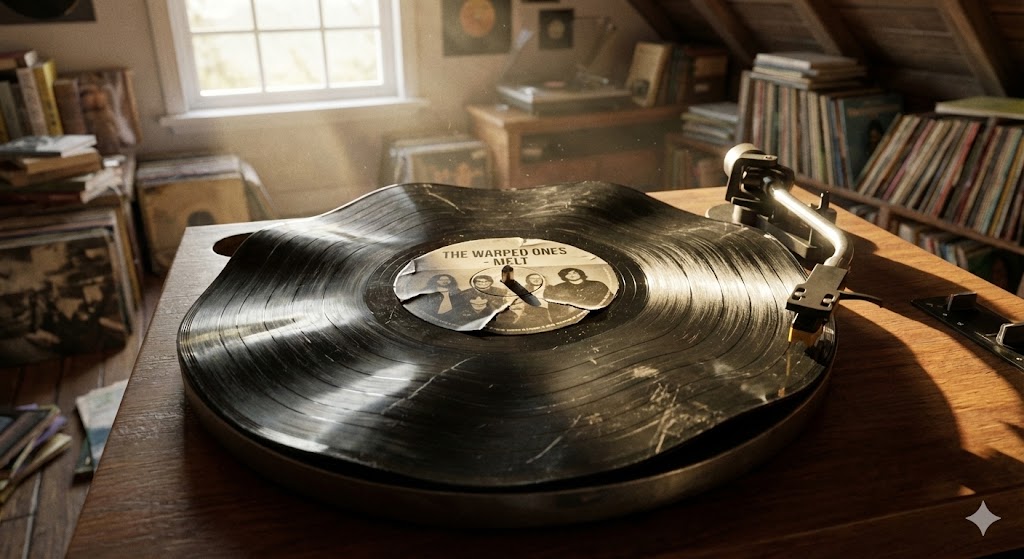
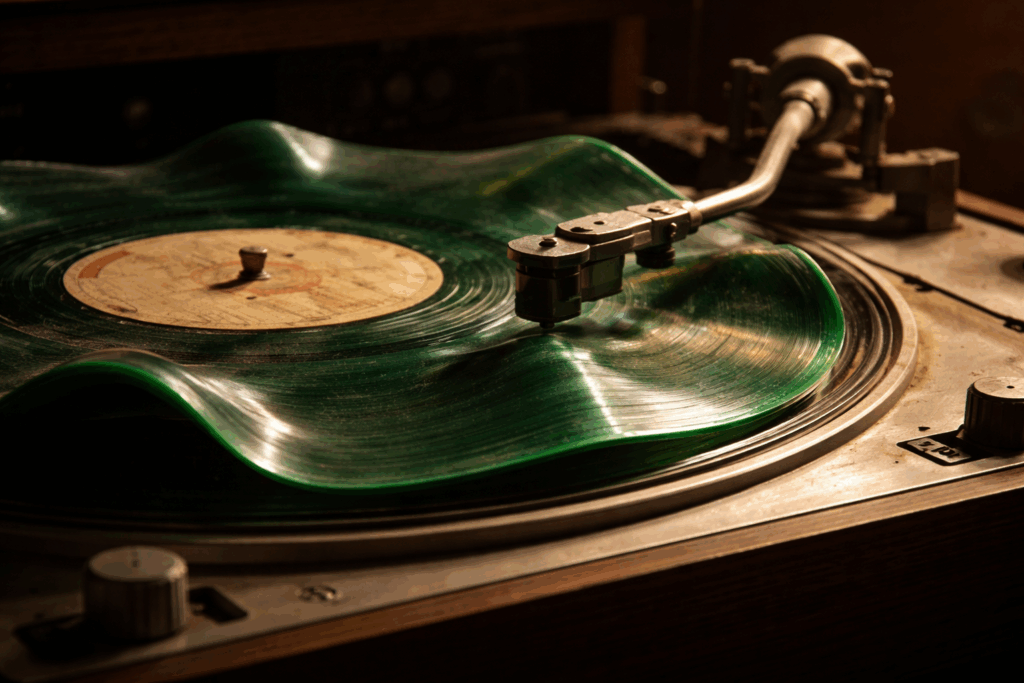

Vertical storage, by contrast, distributes pressure evenly, allowing the records to support one another without stress. A word of caution, however: do not pack them in too tightly. You should be able to retrieve a record from the middle of a row with gentle ease, not brute force.
Protective Dressings: Prescribing Inner and Outer Sleeves
Every patient requires two layers of protection, akin to a sterile dressing and a protective garment. To neglect these is to invite infection and injury.
1: The Inner Sleeve – A Shield Against Abrasion and Static
Most records are discharged from the factory in a standard paper inner sleeve. Whilst better than nothing, paper is a false friend. It is abrasive and, with every use, can inflict micro-abrasions on the delicate groove surface. Furthermore, paper generates a significant static charge, turning your record into a dust magnet.
The prescribed treatment is one of the most effective and affordable health upgrades you can provide: poly-lined, anti-static inner sleeves. These feature a high-density polyethylene lining that is exceptionally smooth, non-abrasive, and dramatically reduces static build-up. Transferring your records to these is like moving them from a draughty, dusty corridor into a clean, private room.
2. The Outer Sleeve – The Guardian of the Patient’s Identity
The album cover is more than mere packaging; it is the patient’s chart, its identity, and a work of art. To protect it from shelf-rash (the infamous “ring wear”), corner bruising, dust, and moisture, it is essential to house it in an archival-quality polythene outer sleeve. This dressing preserves the vibrancy of the artwork, protects the structural integrity of the cover, and maintains the record’s provenance and value.
The Ideal Climate: A Record’s Three Mortal Enemies
You have ensured your patients have the correct posture and are properly dressed. The final step is to ensure their ward is not situated in a hazardous zone. You must protect them from these three environmental threats:
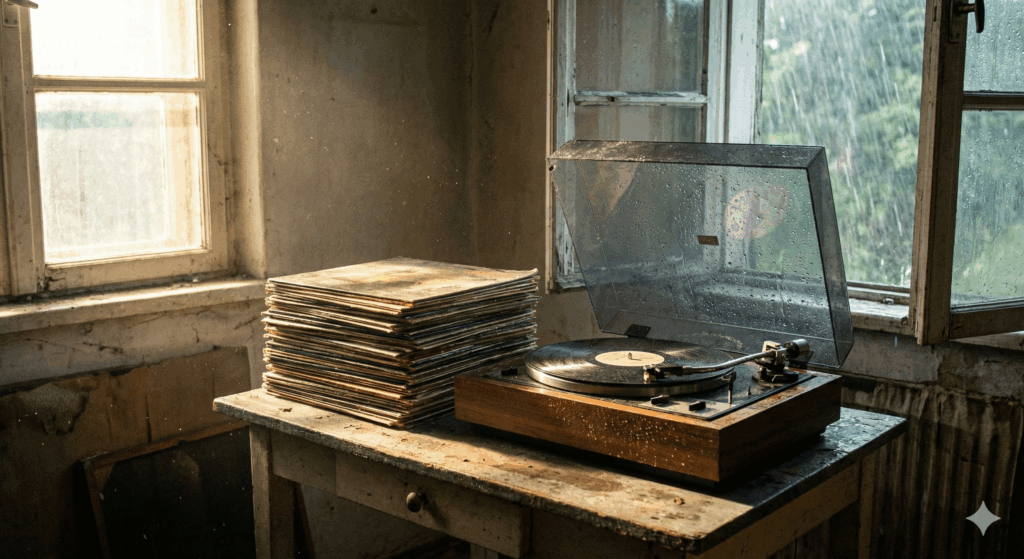
1. Heat (The Fever): This is the primary catalyst for warping. Never store your collection near a radiator, a heating vent, on top of an amplifier, or in the path of direct sunlight. The attic in summer is, I’m afraid, a veritable furnace and strictly off-limits.
2. Direct Sunlight (The Radiation Burn): A dual threat. The heat from the sun can warp a record in a matter of hours, whilst its UV rays will fade the sleeve’s artwork, causing irreversible damage.
3. Humidity (The Damp): This is the enemy of the cardboard sleeve. Damp environments like basements or cellars encourage the growth of mould and mildew—a fungal infection that can stain, weaken, and impart a musty odour to the patient’s cover. A dry, well-ventilated room is the only acceptable climate.
Your Next Appointment
Excellent. You are now equipped with the knowledge to establish a safe, stable, and sterile environment for your records. You can ensure they are positioned correctly, dressed for protection, and safe from environmental hazards.
Now that your patients are properly handled and housed, it is time to discuss their daily hygiene. In our next consultation, we will address The Third Prescription: The Daily Cleaning Ritual, where we will master the use of the most important tool for routine care: the carbon fibre brush.
Until then, do tell me in the comments: where is your recovery ward located? Do you have an ingenious storage solution you wish to share? The Doctor is always keen to hear from you.